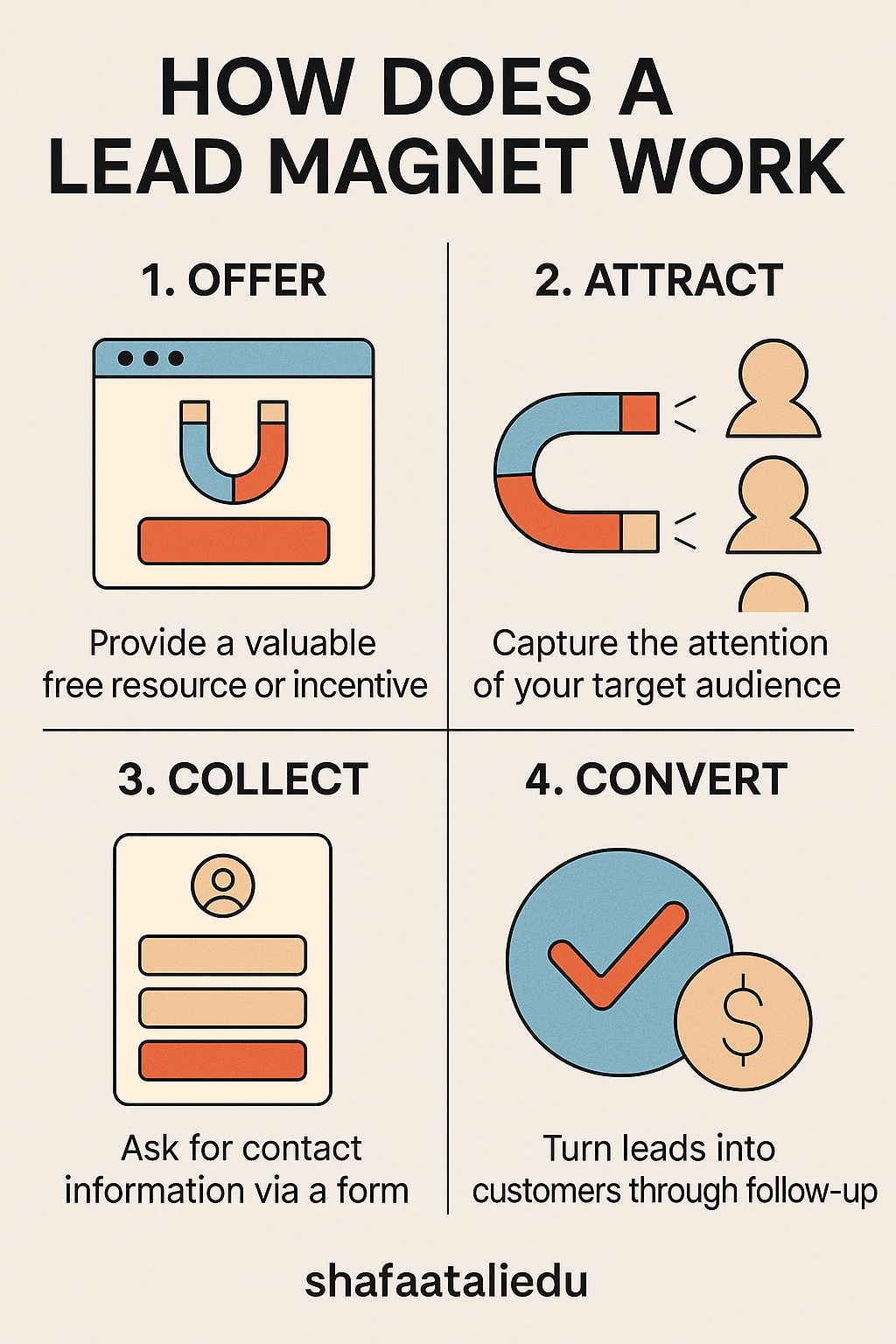
A lead magnet is a free offer you give to potential customers in exchange for their contact information—usually their email address. Think of it like a friendly trade: “You give me your email, and I’ll give you something valuable in return.”
Let’s say you walk into a bakery, and they offer you a free cookie if you sign up for their newsletter. That cookie is the lead magnet. Online, lead magnets often take the form of downloadable resources, like eBooks, checklists, templates, or even discount codes.
The main goal? To attract leads—people who are interested in what you offer—and gently guide them toward becoming paying customers.
Here’s how a lead magnet typically works:
- Create Value: You develop something genuinely helpful. For example, a fitness coach might offer a free “7-Day Meal Plan for Weight Loss.”
- Set Up a Form: You place a sign-up form on your website or social media.
- Deliver the Magnet: Once someone signs up, they receive the free resource instantly via email or download.
- Follow Up: You now have permission to send more content, build trust, and eventually promote your paid services or products.
What makes a good lead magnet? It should solve a real problem, be easy to access, and tailored to your audience’s needs. The more specific it is, the better.
Lead magnets are everywhere—from pop-ups on blogs to sign-up incentives in online stores. They’re one of the most effective tools in digital marketing.
Looking ahead, as privacy becomes more important, lead magnets offer a win-win way to build genuine connections without relying on ads or intrusive tracking. So, whether you’re a small business owner or a content creator, a strong lead magnet can be your first step in growing a loyal audience.
 WEBRONAQ.COM