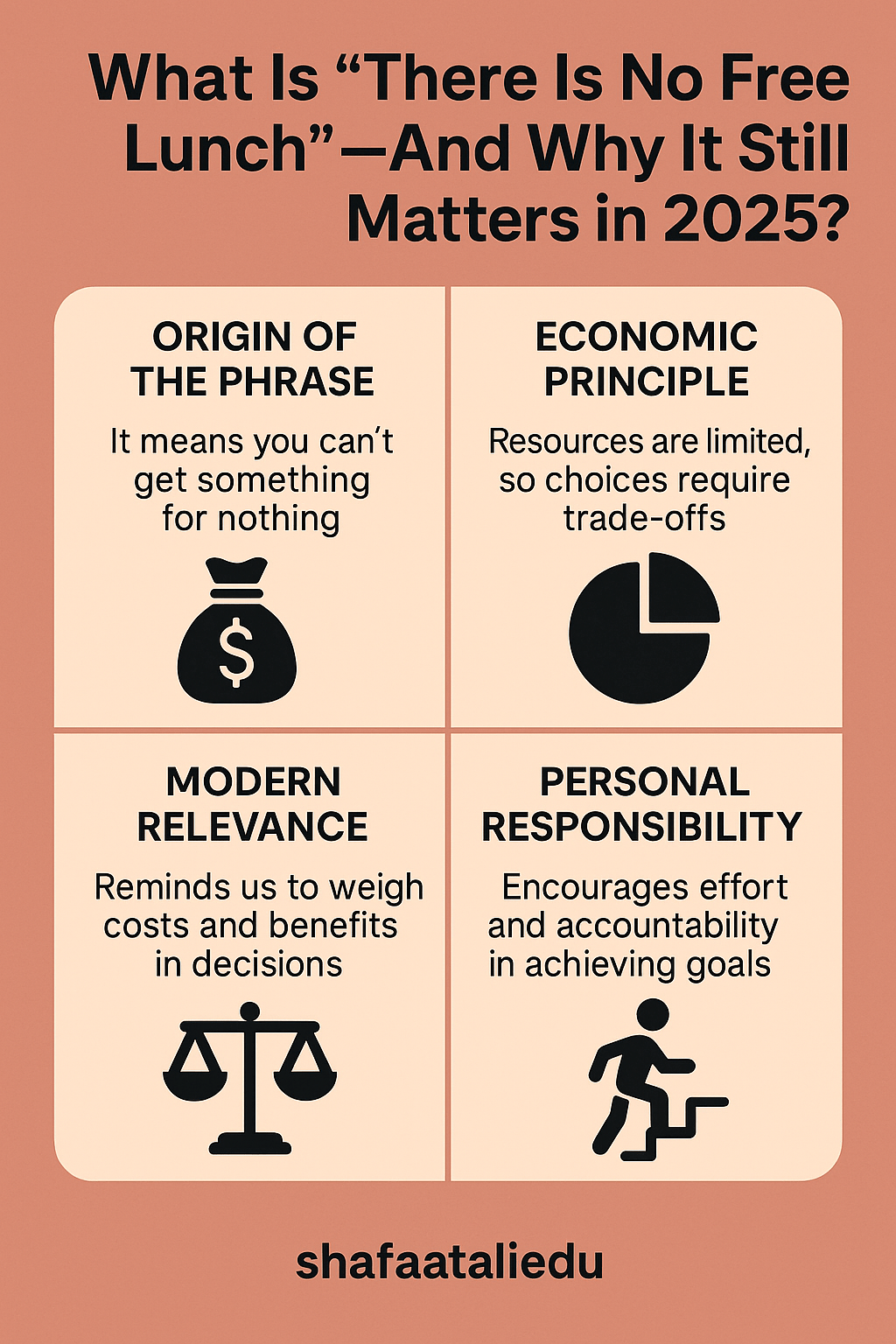
You’ve probably heard the phrase “There is no free lunch.” But what does it really mean, and why are people still saying it in 2025?
At its core, this saying reminds us that nothing in life comes completely free. Even if something appears to be free, someone, somewhere, is paying for it—whether with money, time, energy, or opportunity. The phrase became popular in economics, especially to warn people against the idea that you can get something valuable without giving up anything in return.
Imagine you’re offered a free buffet lunch. Sounds great, right? But maybe you had to sit through a two-hour sales pitch first. Or perhaps the restaurant raises prices for others to cover your “free” meal. That’s the trade-off. The lunch isn’t truly free—it just looks like it on the surface.
In 2025, this idea matters more than ever. Think about “free” apps and social media platforms. They may not charge money, but they collect your data, serve you ads, or influence your decisions. You’re paying—not with cash, but with your privacy and attention.
Even in government programs, business models, or education, understanding this principle helps you ask smart questions. If a new service or policy promises big benefits with no downsides, it’s worth asking: Who’s actually paying the cost?
“There is no free lunch” keeps us grounded. It teaches us to look beyond the surface, understand trade-offs, and make informed decisions.
As technology advances and more things seem “free,” this old phrase still helps us think critically. In a world full of choices, remembering that every benefit has a cost—somewhere—can keep us from being fooled.
 WEBRONAQ.COM