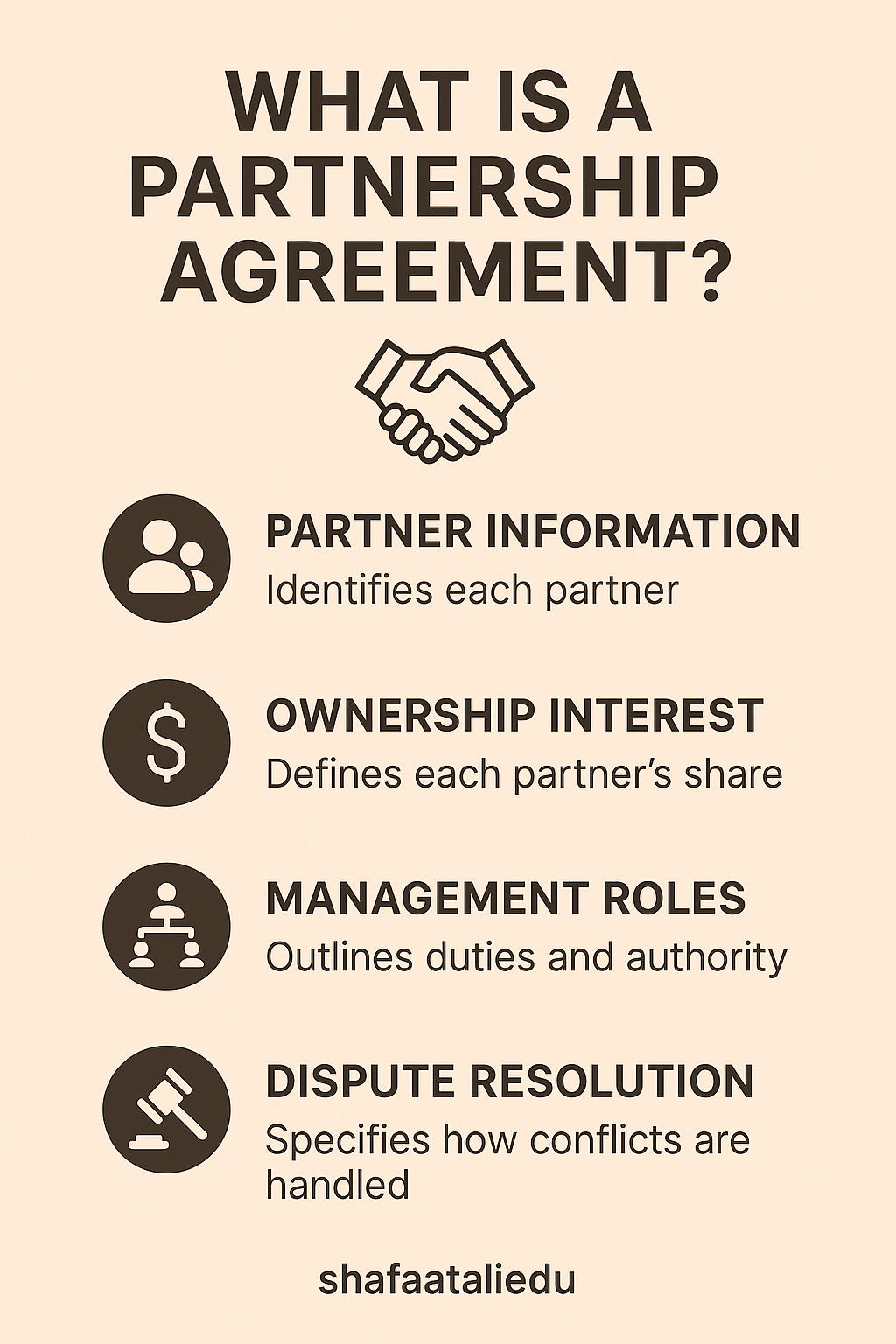
A partnership agreement is a written document that outlines how a business partnership will operate. It’s like a rulebook created by the partners to avoid confusion, disagreements, or surprises later on. Even if you’re starting a business with your best friend, having a clear agreement helps protect both of you.
Think of it like planning a road trip with a group. Before you hit the road, you decide who’s driving, who’s paying for gas, and what happens if the car breaks down. A partnership agreement does the same—just for your business journey.
Here’s what a good partnership agreement usually includes:
- Roles and Responsibilities: Who does what in the business.
- Ownership Shares: How much of the business each partner owns.
- Profit and Loss Distribution: How money will be divided.
- Decision-Making: How major choices will be made—by vote, majority, or another method.
- Dispute Resolution: How to handle conflicts if they arise.
- Exit Plan: What happens if someone wants to leave or the business shuts down.
Without a partnership agreement, your business will be governed by your state’s default laws, which may not reflect what you and your partner actually want. For example, profits might be split 50/50 by law, even if one partner invested more time or money.
Even though it’s not always legally required, having a written partnership agreement is one of the smartest things you can do when starting a business with others. It sets expectations early and helps keep your partnership on track as the business grows.
In a world where clear communication is key, a partnership agreement is your business’s safety net.
 WEBRONAQ.COM