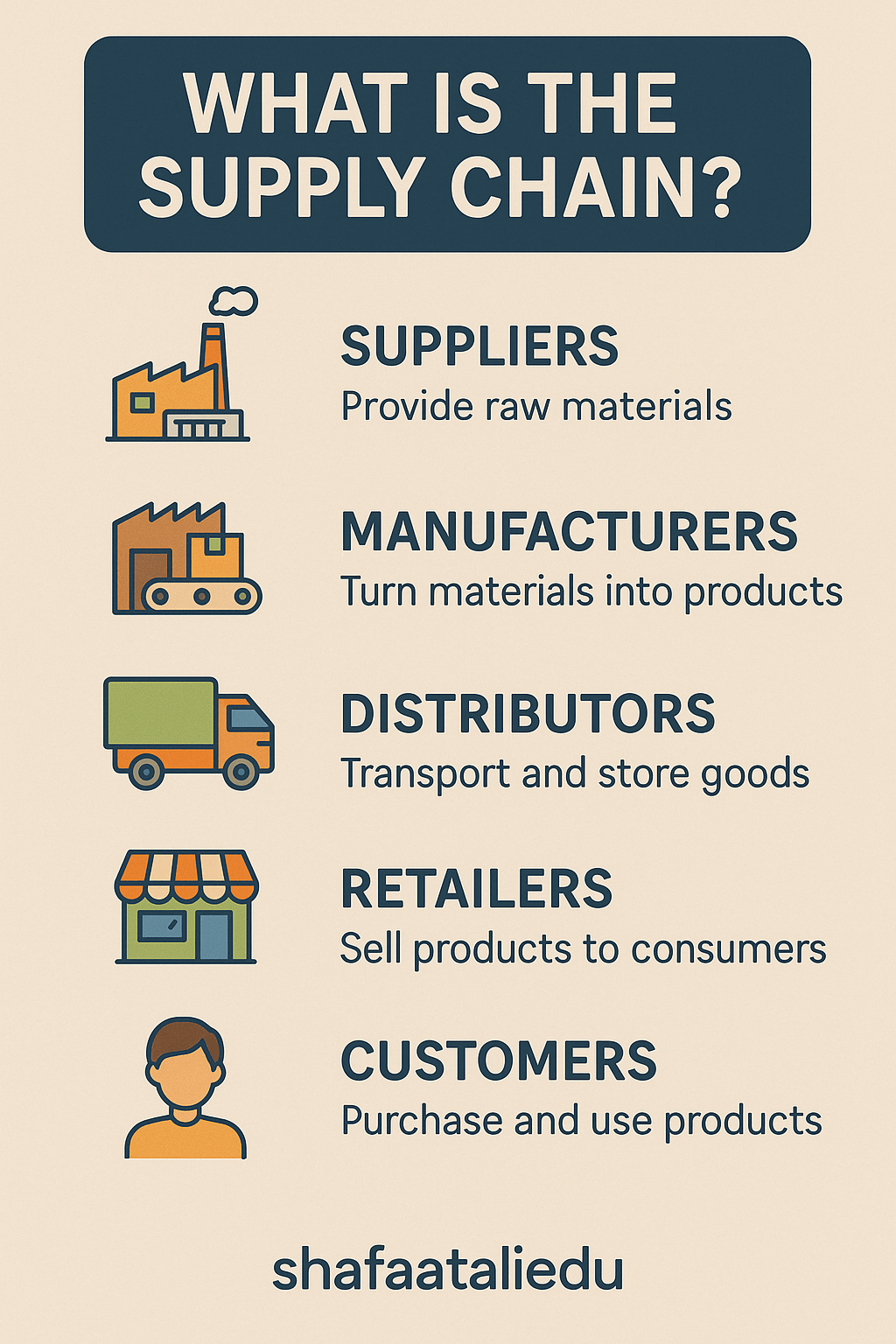
Ever wondered how your phone, T-shirt, or even a loaf of bread gets to you? That’s all thanks to the supply chain—a step-by-step system that moves products from the original source to the final customer. Think of it like a relay race, where each runner hands off the product to the next.
Step-by-Step Breakdown:
- Raw Materials
Every product starts with raw materials—like cotton for clothing or metal for electronics. - Manufacturing
Manufacturers take those raw materials and make finished goods. For example, a factory turns cotton into shirts. - Wholesaling
Next, wholesalers buy large quantities from manufacturers and store them. They don’t sell directly to consumers, but to retailers. - Retailing
Retailers sell products to you, the end customer—either in stores or online. - Transportation & Logistics
Behind all this, transport companies move goods between each stage, and logistics teams track inventory and deliveries. - Customer Service & Returns
Even after a sale, the supply chain continues—handling returns, repairs, or replacements.
Real-Life Example:
Let’s say you buy a chocolate bar.
- A farmer grows cocoa beans (raw materials).
- A factory makes the chocolate (manufacturing).
- A wholesaler stocks it.
- A supermarket sells it to you (retailing).
- A truck delivered it to the store (logistics).
Why It Matters
A smooth supply chain means products are available, affordable, and arrive on time. Disruptions—like delays or shortages—can raise prices or empty store shelves.
As businesses go digital, modern supply chains are using technology like tracking systems and automation to work faster and smarter.
 WEBRONAQ.COM