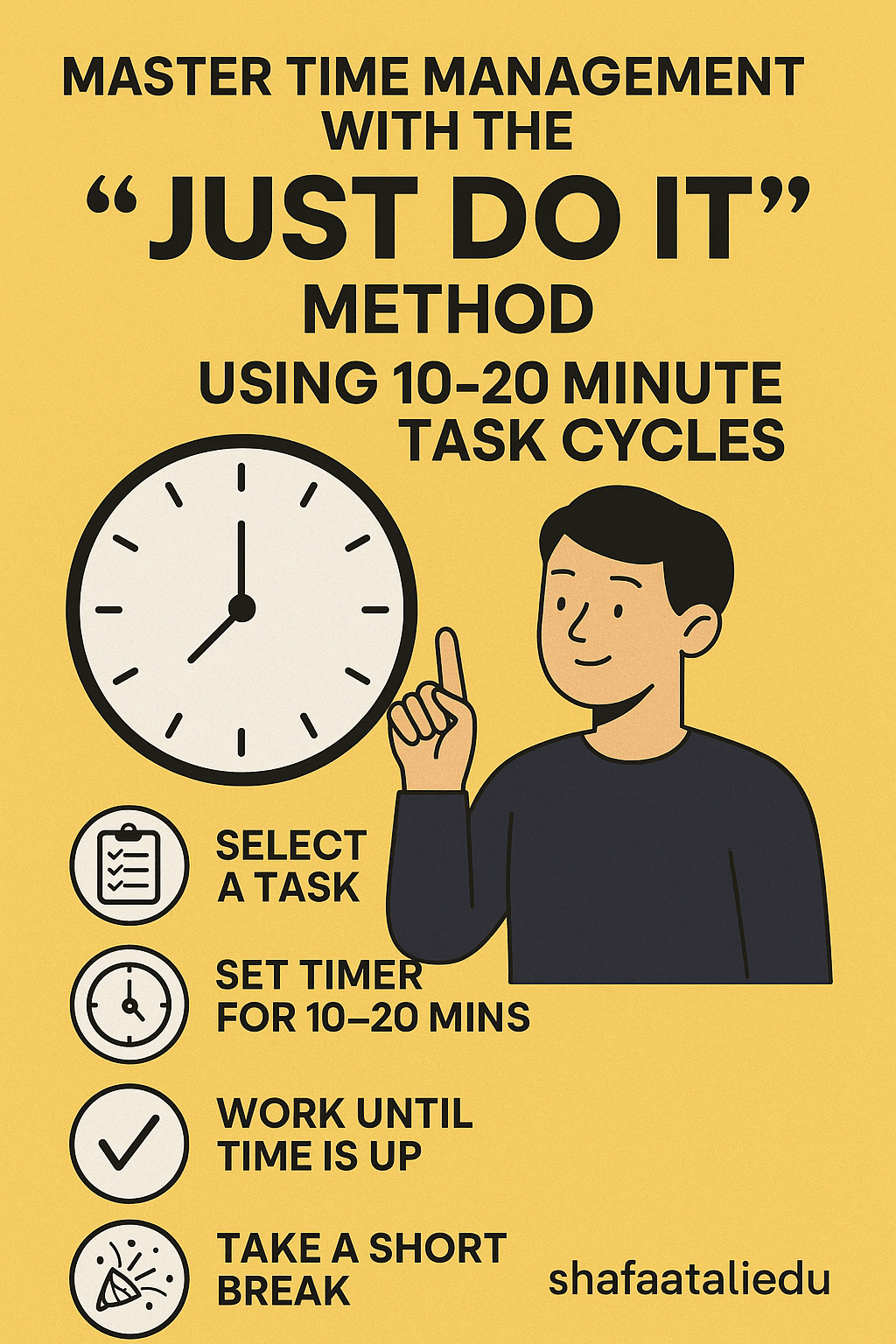
Struggling with time management, procrastination, or constant distractions? You’re not alone. The “Just Do It” method—a simple but powerful mindset shift—can help you take immediate action, stay focused, and accomplish more in less time. When paired with short time chunks (10 or 20 minutes), this method becomes a practical system for productivity, balance, and flow. Here’s how to make it work for your everyday routine.
Step 1: Choose 3–4 Task Categories
To maintain variety and focus, select a few categories that reflect your priorities. For example:
- A work-related task (e.g., writing, answering emails, completing a project)
- A learning task (e.g., reading, studying, skill development)
- A physical activity (e.g., stretching, walking, short workouts)
- A personal task (e.g., journaling, organizing, planning)
This simple mix keeps your mind and body active while moving all areas of life forward.
Step 2: Work in 10–20 Minute Cycles
Pick a chunk size—10 or 20 minutes—depending on how much energy or focus you have. Then rotate tasks in cycles.
Example 1-Hour Rotation (10-Minute Chunks):
- 10 min: Work on a project
- 10 min: Read or watch a learning video
- 10 min: Do some light movement
- 10 min: Respond to messages or organize your space
- 10 min: Continue your project
- 10 min: Plan your next steps or take a short mental break
This structure helps maintain momentum while preventing boredom or burnout.
Step 3: Just Start—No Overthinking
The core principle of this method is to take action immediately, without overanalyzing. Don’t wait to feel ready.
Say to yourself:
- “I’m only doing this for 10 minutes.”
- “It doesn’t have to be perfect—just started.”
- “Action creates clarity.”
Once you begin, you often keep going. The hardest part is starting.
Step 4: Use a Timer
Timers keep you on track and prevent drifting. You can use:
- A simple phone or kitchen timer
- Pomodoro apps
- Google search: “10-minute timer”
Set it, press start, and get moving.
Step 5: Take Small Breaks After a Few Cycles
After every 60–90 minutes, take a 5–10 minute break. Avoid passive screen time. Instead:
- Walk around
- Stretch
- Drink water
- Breathe and reset
These mini-breaks help recharge your energy without losing momentum.
Keep This Mindset in Mind
- “Win the next 10 minutes.”
- “Progress happens in small, repeated steps.”
- “Focus on the present moment—not the entire day.”
Why It Works
- You reduce resistance. Smaller tasks are easier to begin.
- You stay fresh. Switching tasks prevents mental fatigue.
- You build rhythm. Repeating cycles creates structure and habit.
This system works for anyone—students, professionals, parents, creatives, or anyone looking to get more done without stress. You don’t need fancy planners or perfect schedules. All you need is a timer, a plan, and the willingness to start now.
 WEBRONAQ.COM