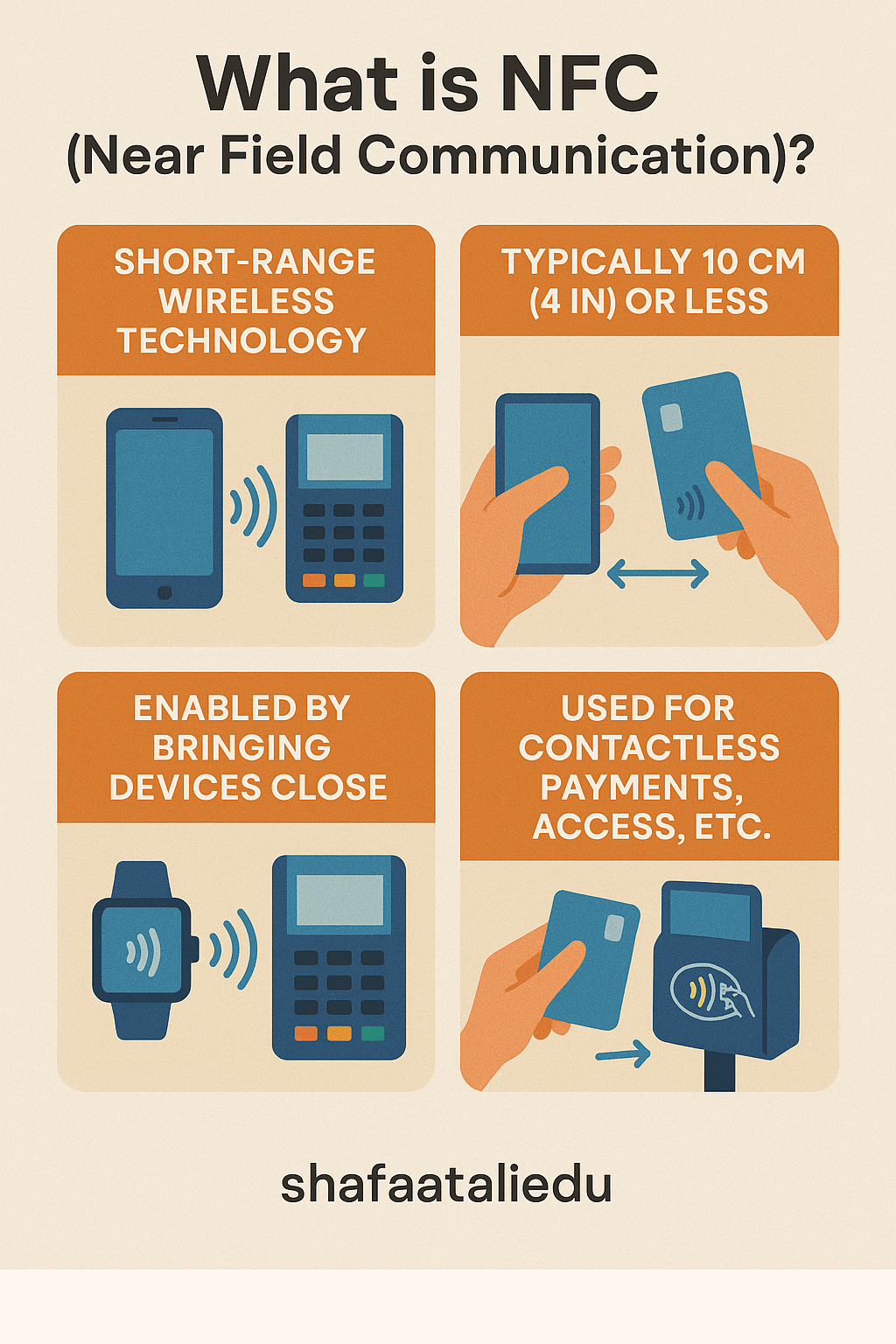
NFC, or Near Field Communication, is a short-range wireless technology that lets two devices communicate when they’re very close—usually within 4 centimeters (about 1.5 inches). Think of it like a digital “high five” between gadgets. You’ve probably already used NFC if you’ve tapped your phone to pay at a store or shared photos between phones just by touching them.
Here’s how it works: One device (like your smartphone) creates a small magnetic field. When another NFC-enabled device enters that field, the two can exchange small amounts of data instantly. It’s fast, secure, and doesn’t require an internet connection.
There are three main ways NFC is used:
- Peer-to-peer: Two devices exchange data, like sharing a contact or a playlist.
- Reader/writer: Your phone scans information from an NFC tag, like tapping a poster to get event details.
- Card emulation: Your phone acts like a credit card for payments—popular in Apple Pay, Google Pay, or Samsung Pay.
Let’s simplify it with a real-life example. Imagine going through a toll booth. Instead of handing over cash or a card, you just wave your phone, and you’re good to go. That’s NFC at work—quick, easy, and touch-free.
NFC is also used in hotel key cards, transit passes, and even smart business cards. It’s designed for convenience and security. Since it only works at very short distances, it’s tough for hackers to intercept.
In a world moving toward contactless everything, NFC is helping make our daily routines smoother and smarter. From fast checkouts to smart posters, it’s quietly becoming a tech essential.
Curious what else your phone can do wirelessly? Stay tuned—NFC is just the beginning.
 WEBRONAQ.COM