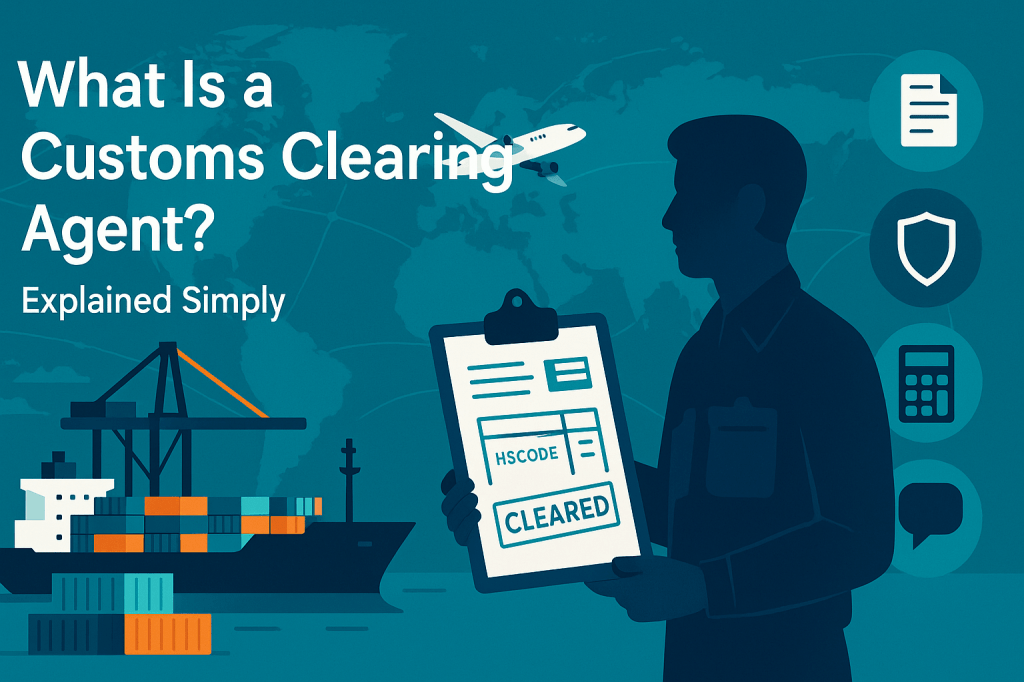
A customs clearing agent (also called a customs broker) is a licensed professional or company that helps importers and exporters move goods through a country’s customs. They prepare paperwork, calculate duties and taxes, coordinate inspections, and communicate with customs authorities so your shipment is cleared legally and on time.
What Do They Actually Do?
- Prepare and submit documents: Commercial invoice, packing list, bill of lading/airway bill, certificate of origin, import/export permits, and HS codes.
- Classify goods correctly: They assign the right Harmonized System (HS) code so duties and taxes are calculated properly.
- Calculate duties and taxes: They estimate the total landed cost—including customs duty, sales tax/VAT, and other fees.
- Liaise with customs officials: They answer queries, arrange inspections, and handle any holds.
- Coordinate logistics at the port: From terminal handling to releasing the delivery order and arranging last-mile transport.
- Keep you compliant: They stay updated on regulations, restricted items, and documentation rules.
Why Would You Need One?
- Save time: Ports and airports have strict processes and deadlines; agents know the shortcuts (the legal ones!).
- Avoid fines: Wrong HS codes or missing permits can lead to penalties or cargo holds.
- Plan costs: Clear duty/tax estimates prevent surprise expenses.
- Local know-how: Rules vary by country and even by port; agents know the local playbook.
A Quick Example
You’re importing 100 phone accessories.
- Your agent reviews the invoice and product specs, assigns the correct HS code, and calculates duty and taxes.
- They submit the declaration electronically, pay assessed duties on your behalf, and respond if customs requests a physical inspection.
- Once cleared, they arrange pickup from the terminal to your warehouse. You receive the goods with all official receipts and records.
Key Documents They Handle
- Commercial invoice & packing list
- Bill of lading or airway bill
- HS code classification sheet
- Certificate of origin or FTA documents (if applicable)
- Import/export licenses or NOCs (for controlled goods)
Customs Agent vs. Freight Forwarder
- Customs clearing agent: Focuses on compliance and clearance—documents, duties, and coordination with customs.
- Freight forwarder: Focuses on transport—booking sea/air/road space, consolidating cargo, and managing routes.
Many companies offer both services, but they’re not the same role.
How Fees Usually Work
- Service fee: A fixed brokerage/clearance charge.
- Disbursements: Duty, taxes, and port fees paid on your behalf (billed back at cost).
- Extras: Storage, demurrage, inspection fees, or courier charges if needed.
Tips for Choosing a Good Agent
- Check licensing: Ensure they’re officially accredited in the country of clearance.
- Ask about your product category: Electronics, foods, chemicals, and textiles have special rules.
- Confirm digital capability: E-filing, online tracking, and quick document sharing reduce delays.
- Get a clear quote: Ask for a breakdown of brokerage fees, expected duties/taxes, and potential extras.
- Look for responsiveness: Fast, clear communication saves days at the port.
Common Mistakes to Avoid
- Undervaluing goods to reduce duty (illegal and risky).
- Vague descriptions on invoices (“parts” instead of “silicone phone case”).
- Missing permits for restricted items (e.g., medical devices, cosmetics, batteries).
- Late document submission leading to storage/demurrage charges.
Bottom Line
A customs clearing agent is your compliance partner at the border. They translate trade rules into action, keep your shipment legal, and help you avoid costly delays—so you can focus on buying and selling, not navigating red tape.
 WEBRONAQ.COM