WebRonaq Videos
Watch, learn and discover.
Explore published videos and Shorts from the WebRonaq catalog. Use the catalog links to keep browsing older releases.
Videos
Latest videos
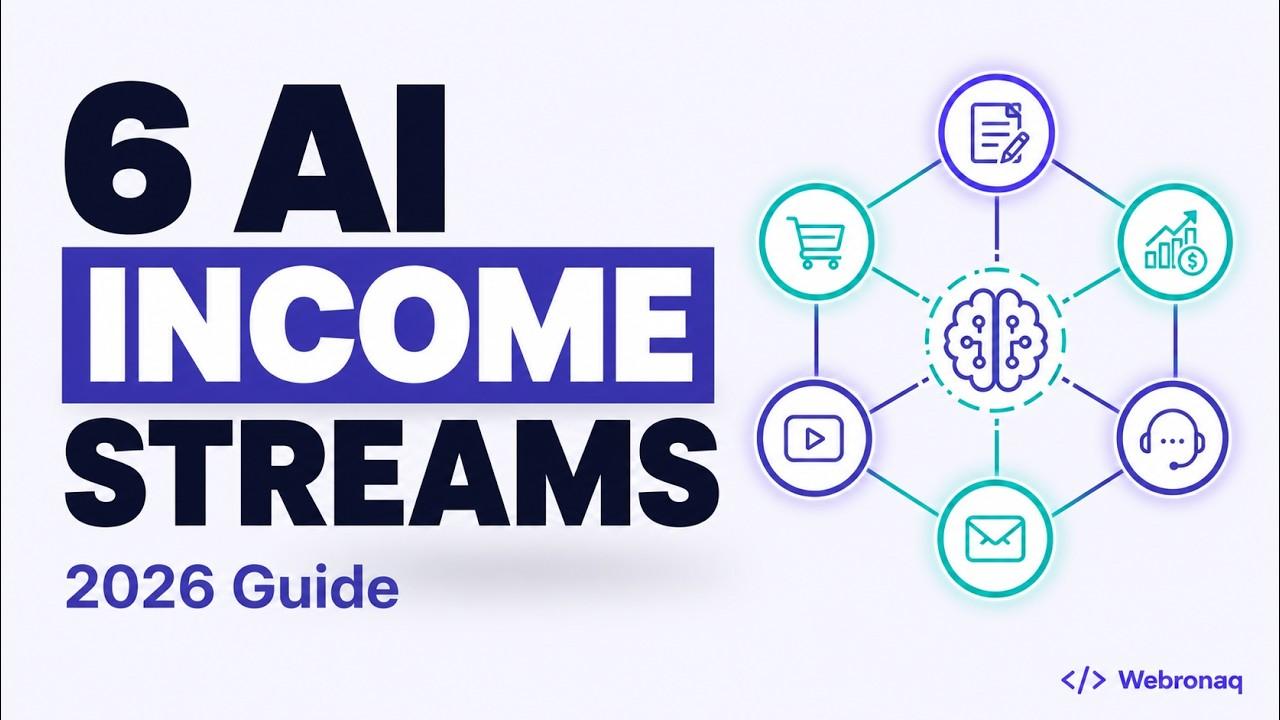
How to Make Money with AI Agents (2026 Guide)
Make money with AI agents in 2026 using 6 proven paths, from freelance automation services to recurring agent-as-a-SaaS products earning $97-$997 per customer per month. AI agents are no longer a developer experiment. On July 9, 2026, OpenAI launched ChatGPT Work, an agentic mode that executes multi-hour projects across Gmail, Slack, and Google Drive, and it landed inside plans millions already pay for. Meanwhile, Claude Opus 5 and Grok 4.6 both hit the API within weeks, putting frontier agent-building tools in every developer's hands right now. Upwork's 2026 In-Demand Skills report found AI-related freelance skills grew 109 percent year-over-year. This video breaks down exactly who is cashing in, how they are pricing their work, and which path fits your current skill level. Whether you want freelance income, recurring SaaS revenue, or an AI-powered content business, this is the clearest roadmap available. In this video: - What separates an AI agent from a simple chatbot (the one distinction that makes them valuable) - 6 specific income models: AI freelancing, lean agency, agent-as-a-SaaS, custom builds, AI marketing, and content websites - Real pricing benchmarks: $75-$250 per hour for freelancers, $2,000-$10,000 for custom builds - Why generic AI agent listings lose and how outcome-specific positioning wins premium rates - Which model to start with today based on whether you code or not Subscribe to Webronaq for clear, practical lessons on computer science, AI, and software engineering: https://www.youtube.com/@webronaq #AIAgents #MakeMoneyWithAI #AIFreelancing #AIAutomation #Webronaq
Aug 18, 2026
Watch video →
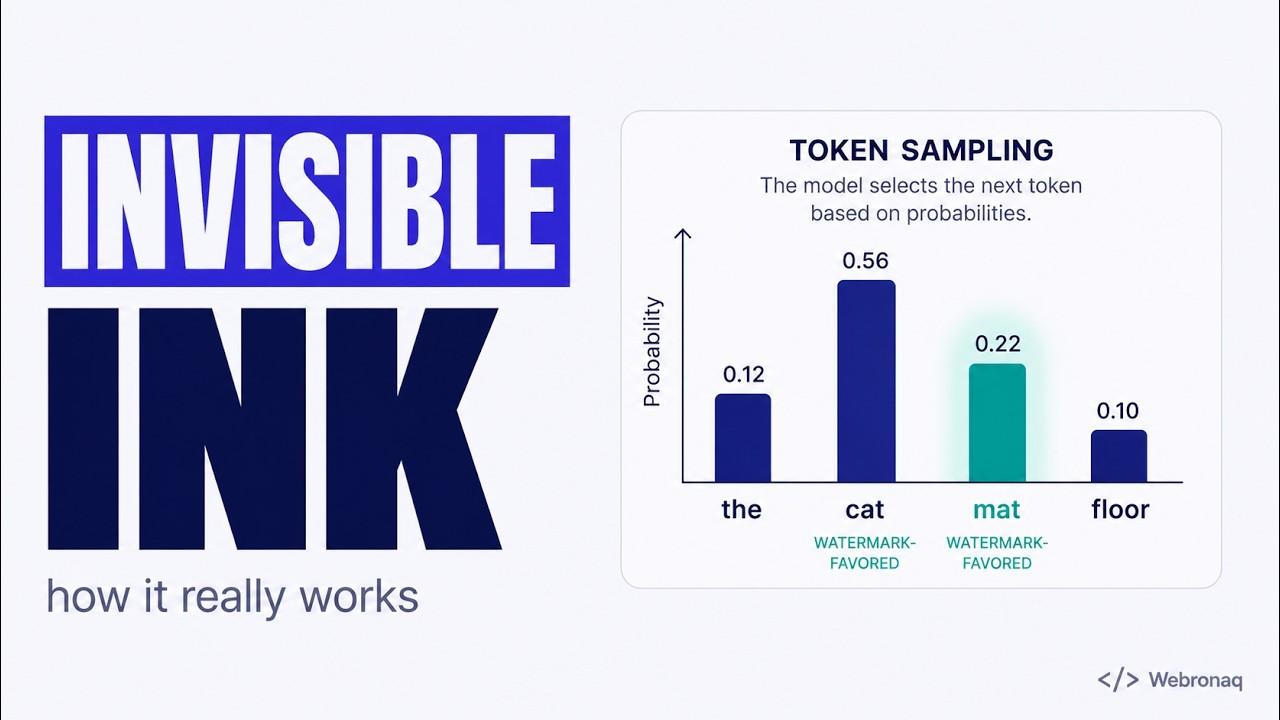
How Claude's Invisible Text Watermark Actually Works
Claude watermark how does it work: every Claude model now embeds a statistical text fingerprint in every output, and it is invisible to readers but detectable with a secret key. On August 11, 2026, Anthropic announced that all Claude models embed an invisible watermark in every piece of text they generate, starting August 2, 2026, to comply with EU AI Act Article 50. Their method, confirmed August 14, is a version of SynthID-Text, Google DeepMind's tournament-sampling technique published in Nature in 2024. This video breaks down exactly how that token-sampling bias works, why it is undetectable without the key, and what it genuinely can and cannot prove about a piece of AI-generated text. Essential watching for developers, CS students, and anyone building with Claude's API today. In this video: - How language models pick the next token and where the watermark lives - How SynthID-Text uses a cryptographic key to bias token selection - Why paraphrase attacks remove the watermark and how fragile statistical signals are - Text watermark vs. C2PA file metadata: two completely different mechanisms - What a watermark hit actually proves and what it does not Subscribe to Webronaq for clear, practical lessons on computer science, AI, and software engineering: https://www.youtube.com/@webronaq #claudewatermarkhowdoesitwork #SynthIDText #AIwatermark #EUAIAct #LLM
Aug 16, 2026
Watch video →
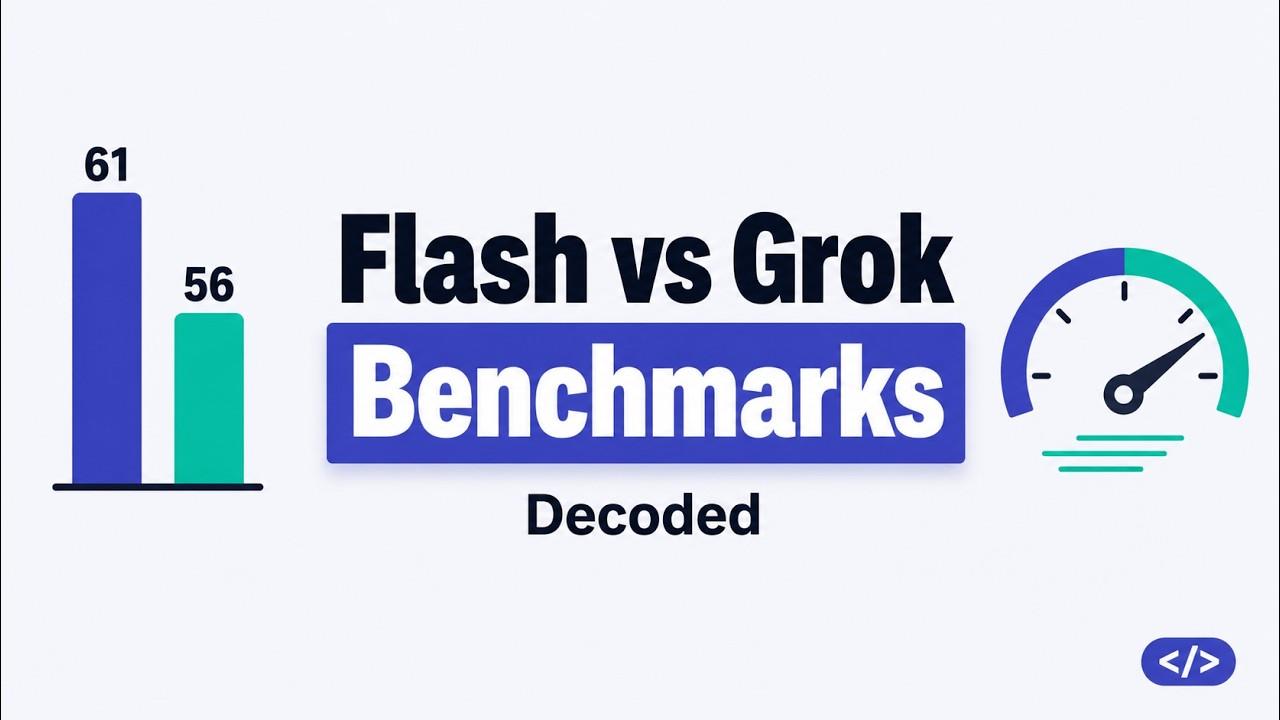
Gemini 3.7 Flash vs Grok 4.6: Full Benchmark Breakdown
Gemini 3.7 Flash vs Grok 4.6 benchmarks compared side by side: what each score actually measures and which model fits your use case. Google dropped Gemini 3.7 Flash on August 13, 2026, scoring 56 on the Artificial Analysis Intelligence Index and ranking first among 186 models on output speed at 340.1 tokens per second. One day earlier, SpaceXAI released Grok 4.6, scoring 61 on the same composite index. Two launches, two sets of claimed wins, and very different numbers depending on which benchmark you read. This video cuts through the noise, explaining what LLM benchmarks actually measure, where each model leads, and how to use a cost-per-intelligence framework to make the right call for your project, whether you care about speed, coding performance, agentic reasoning, or context window size. In this video: - What LLM benchmarks measure and why no single score tells the whole story - Artificial Analysis Intelligence Index scores: Grok 4.6 at 61 vs Gemini 3.7 Flash at 56 - Where Flash leads: output speed and DeepSWE coding benchmark results - Price comparison and cost-per-intelligence as a practical production metric - A clear decision framework based on speed, intelligence, price, and context window Subscribe to Webronaq for clear, practical lessons on computer science, AI, and software engineering: https://www.youtube.com/@webronaq #GeminiFlashvsGrok4 #LLMBenchmarks #AIModels2026 #MachineLearning #Webronaq
Aug 15, 2026
Watch video →
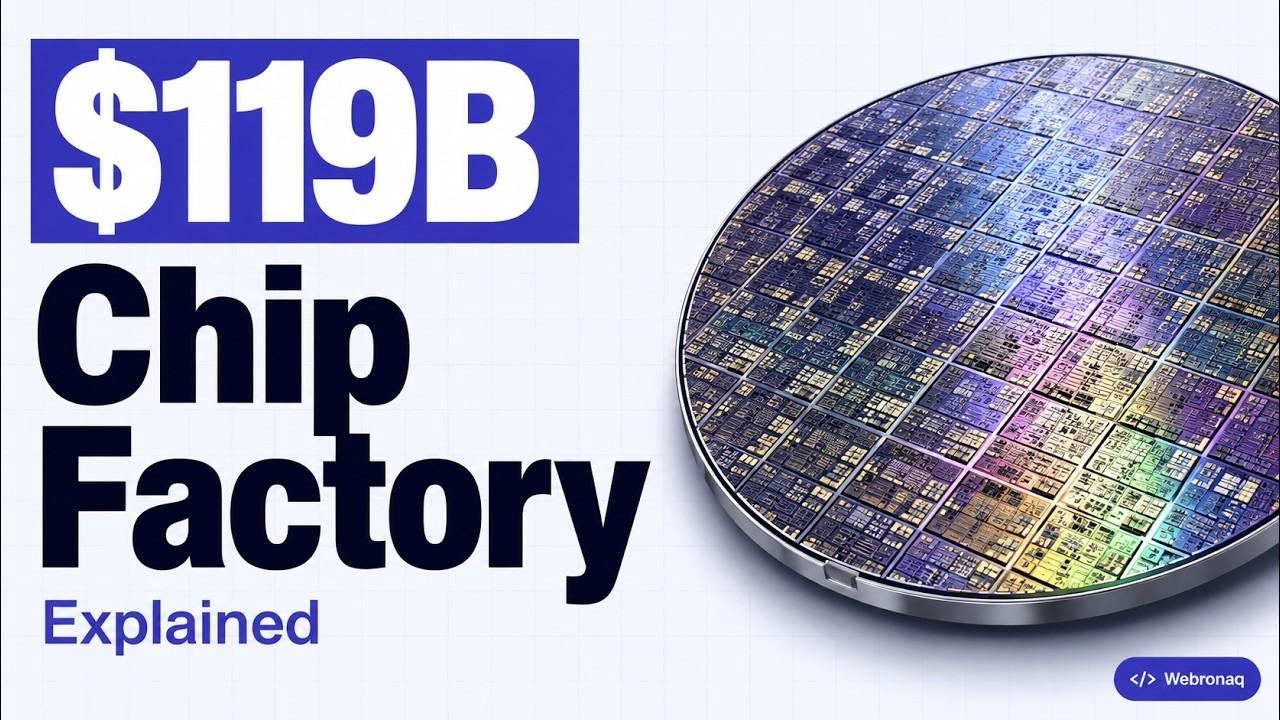
Terafab: The $119B Chip Factory Changing AI
Terafab is Tesla and SpaceX's $119B semiconductor megafactory in Texas, designed to produce one terawatt of AI compute per year and reduce dependence on TSMC and Nvidia. On August 6, 2026, Tesla and SpaceX confirmed Terafab's location in Grimes County, Texas, with a first-phase investment of $16.8 billion. This video breaks down exactly what Terafab is, what AI chips it will produce, how it compares to Nvidia's GPU dominance, and why vertical integration in semiconductor manufacturing matters for the future of AI hardware. Whether you're studying computer architecture, following AI infrastructure trends, or just want to understand why a rocket company is becoming a chip company, this is the clearest explainer you'll find. In this video: - What Terafab is and why Tesla and SpaceX are building their own semiconductor fab - The two chip types: edge inference chips for robots and cars, and high-power chips for space-based AI - How Terafab compares to Nvidia's AI chip market dominance - The realistic production timeline, from 2026 groundbreaking to 2028 first chips - What vertical integration in chip manufacturing actually means Subscribe to Webronaq for clear, practical lessons on computer science, AI, and software engineering: https://www.youtube.com/@webronaq #TerafabChipFactory #AIChips #ComputerArchitecture #TeslaAI #SemiconductorManufacturing
Aug 14, 2026
Watch video →
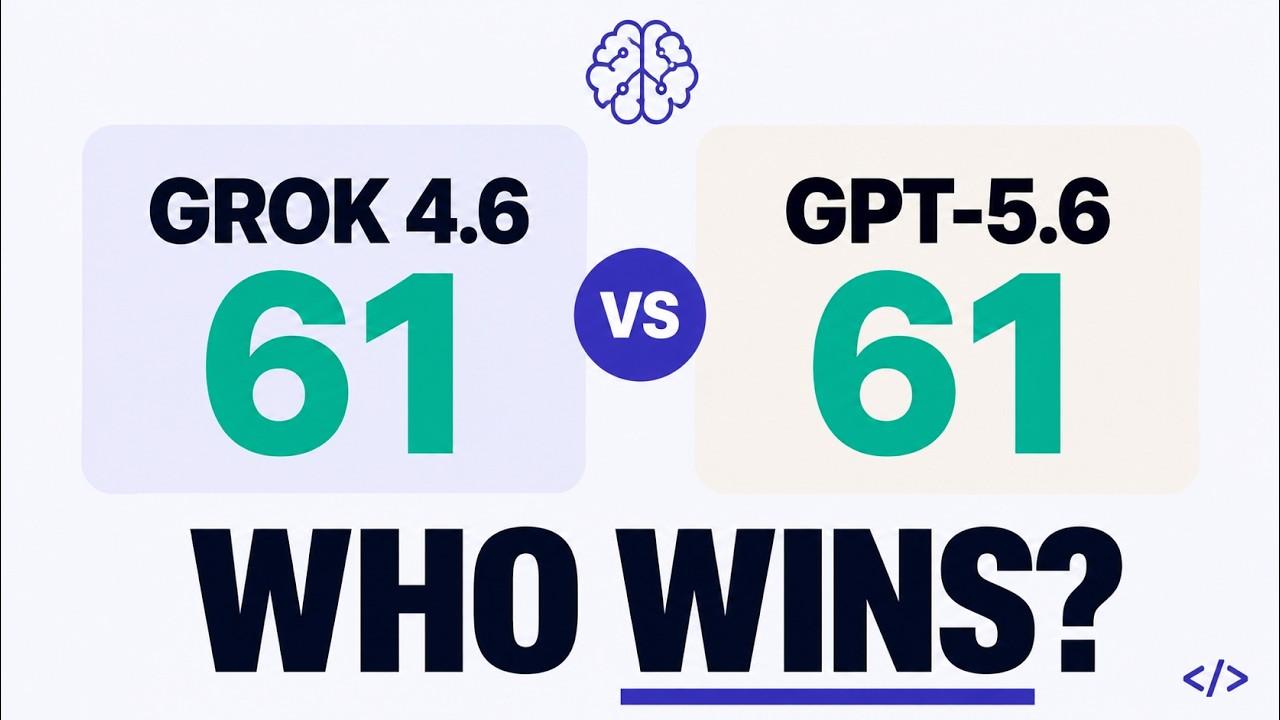
Grok 4.6 Is Out: Benchmarks, Best Uses & Grok 4.7
Grok 4.6 dropped August 12, 2026, matching GPT-5.6 Sol Max at 61 on the Artificial Analysis Intelligence Index while costing a fraction of the price. Here is what the numbers actually mean. SpaceXAI released Grok 4.6 on August 12, 2026, and it immediately matched GPT-5.6 Sol Max at 61 on the Artificial Analysis Intelligence Index, trailing Claude Fable 5 Max by just one point. The gains came entirely from improved post-training, specifically supervised fine-tuning and reinforcement learning, on the same 1.5-trillion-parameter V9 base. This video breaks down every benchmark, the real cost comparison, and what Grok 4.7 means for developers choosing the right AI model for production workloads today. In this video: - How Grok 4.6 compares to GPT-5.6 Sol Max and Claude Fable 5 Max on the Artificial Analysis Intelligence Index - Where Grok 4.6 leads: GDPVal-AA v2 agentic tasks and APEX-Agents scores - Where it still trails: DeepSWE v1.1 and Terminal-Bench v3.0 gaps explained - Price versus performance: why output tokens cost five times less than Sol Max - What Grok 4.7, a 2.1-trillion-parameter model, changes for the near future Subscribe to Webronaq for clear, practical lessons on computer science, AI, and software engineering: https://www.youtube.com/@webronaq #Grok46benchmarks #Grok4 #AImodels #LLMcomparison #Webronaq
Aug 13, 2026
Watch video →
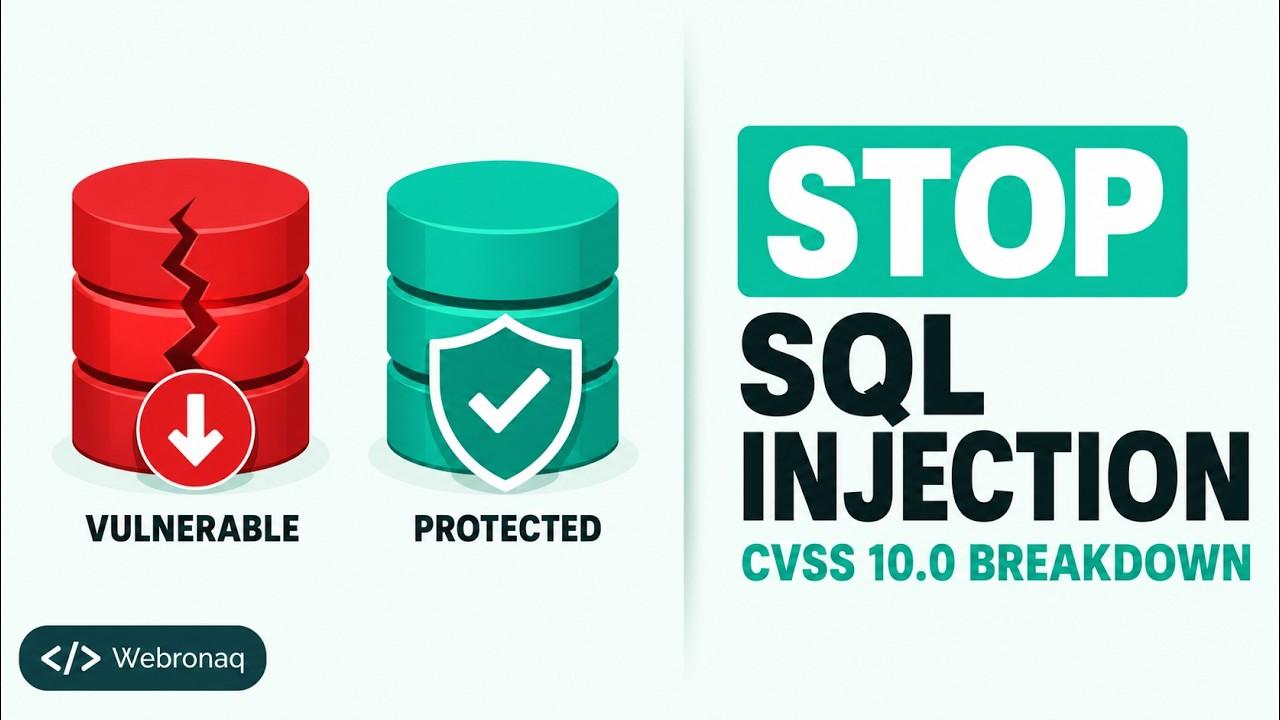
Metabase SQL Injection Zero-Day: CVSS 10.0 Explained
Metabase SQL injection zero-day 2026 (GHSA-vwf4-m7j8-wcjf, CVSS 10.0): how one unauthenticated POST request compromised entire customer databases at Framework and Tally. In August 2026, a zero-day SQL injection flaw in Metabase, a widely used open-source business intelligence platform, let attackers gain full admin access with a single unauthenticated HTTP request. This video breaks down exactly how SQL injection works, why ORM query builders create hidden raw-SQL surfaces, how the Metabase exploit chain unfolded step by step, and what the perfect CVSS 3.1 base score of 10.0 actually means in practice. Whether you are studying web security, building apps that touch a database, or just trying to understand why BI platform breaches are uniquely catastrophic, this is the clearest walkthrough you will find. In this video: - How SQL injection turns user input into a live database command - Why ORM raw-SQL escape hatches in password-reset endpoints are high-risk - The full exploit chain for GHSA-vwf4-m7j8-wcjf, from POST request to admin session - How to read a CVSS 3.1 score and why this one hit 10.0 - Four concrete defenses: parameterized queries, endpoint hardening, least privilege, and fast patching Subscribe to Webronaq for clear, practical lessons on computer science, AI, and software engineering: https://www.youtube.com/@webronaq #MetabaseSQLinjectionzerodaY2026 #SQLinjection #cybersecurity #CVSSscore #webappsecurity
Aug 10, 2026
Watch video →
YouTube Shorts