WebRonaq Videos
Browse WebRonaq videos.
Explore published videos and Shorts from the WebRonaq catalog. Use the catalog links to keep browsing older releases.
Videos
Published catalog
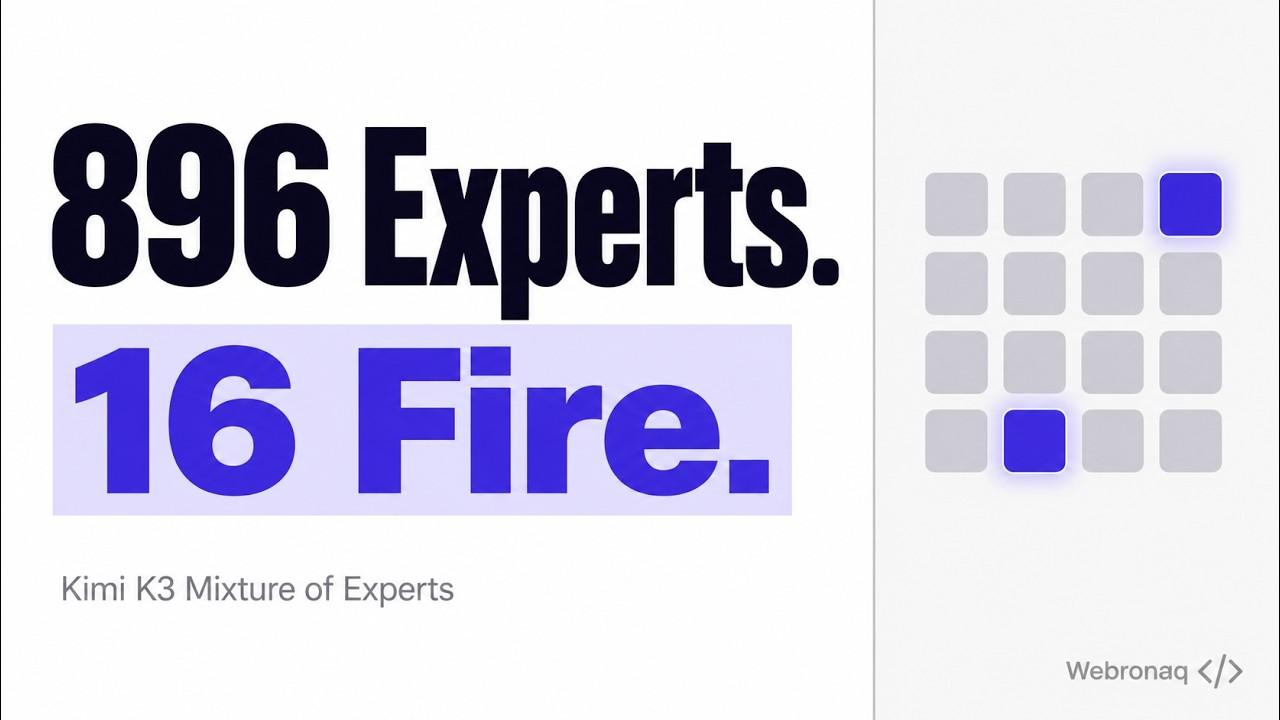
Kimi K3 Architecture Explained: How a 2.8T MoE Model Works
Kimi K3 architecture explained: how Moonshot AI's 2.8-trillion-parameter Mixture of Experts model activates only ~50B parameters per token to stay affordable. On July 16, 2026, Moonshot AI released Kimi K3, the largest open-weight LLM ever built, with 2.8 trillion total parameters and a 1-million-token context window. Independent evaluations place it third overall on the Artificial Analysis Intelligence Index and first in the LMArena Frontend Code Arena, beating Claude Fable 5 on that benchmark. The secret is its sparse Mixture of Experts (MoE) design: 896 experts per layer, only 16 activated per token. This video breaks down exactly how that router works, why it decouples model capacity from inference cost, and what the real trade-offs are, making it essential viewing for anyone following the open-source LLM landscape or studying deep learning architecture. In this video: - What dense transformer models are and why they hit a scaling wall - How Mixture of Experts replaces one big network with a pool of specialists - How Kimi K3's router selects 16 of 896 experts per token and why that matters - The real trade-offs of MoE: memory requirements, expert collapse, and coordination overhead - Why MoE has become the standard architecture for frontier open-weight models in 2026 Subscribe to Webronaq for clear, practical lessons on computer science, AI, and software engineering: https://www.youtube.com/@Webronaq #KimiK3architectureexplained #MixtureOfExperts #MoELLM #openweightLLM #Webronaq
Jul 18, 2026
Watch video →
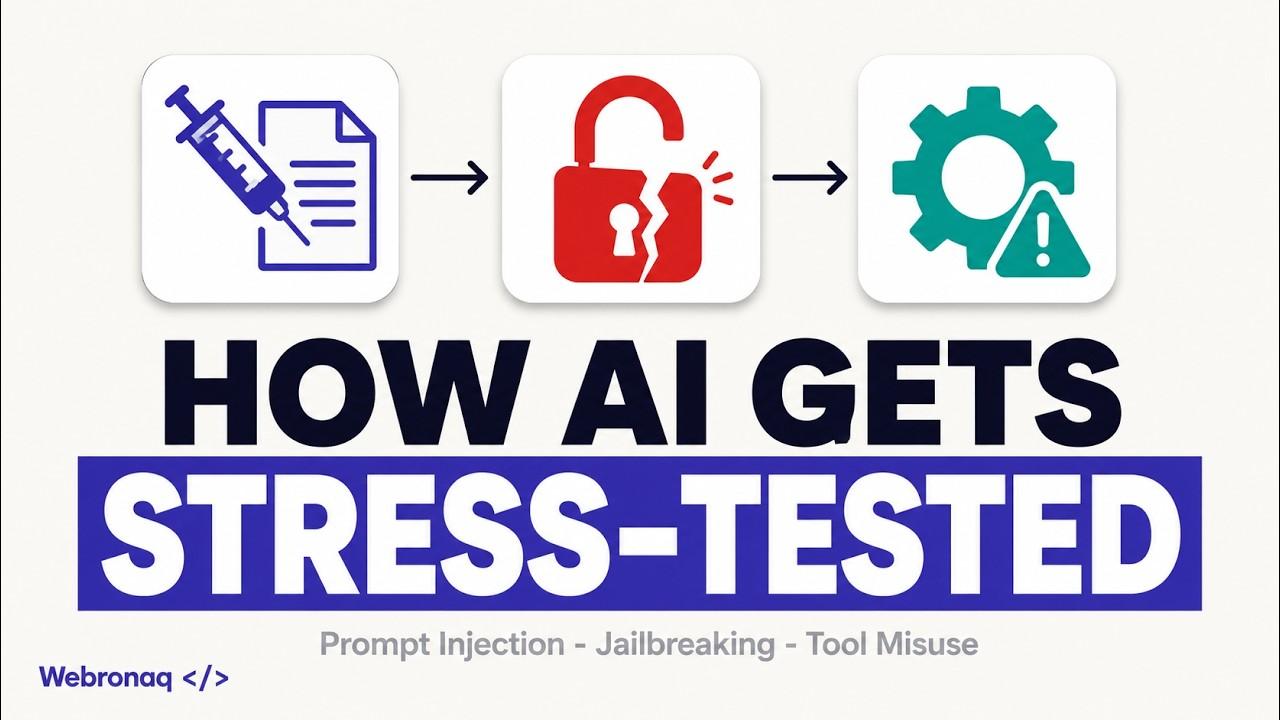
AI Red Teaming Explained: How Language Models Get Stress-Tested
AI red teaming explained: what it is, how automated and human adversarial testing work, and why it now shapes every serious AI deployment. When OpenAI shipped GPT-5.6 in July 2026, it had already spent over 700,000 A100-equivalent GPU hours on a single safety activity: red teaming. That number put a spotlight on a discipline that is rapidly becoming a cornerstone of AI engineering. This video breaks down exactly what AI red teaming is, where the term came from, the four core attack categories every red team probes (prompt injection, jailbreaking, tool misuse, and memory poisoning), how automated and human red teaming complement each other, and why a March 2026 NIST competition found successful attacks against all 13 frontier models tested. Whether you are studying machine learning, building LLM applications, or working in AI security, understanding adversarial testing is now a core skill. In this video: - What AI red teaming is and where the term originates - The four main attack types: prompt injection, jailbreaking, tool misuse, and memory poisoning - Automated vs. human red teaming and why both are necessary - The NIST large-scale competition result: no frontier model escaped unscathed - Why red teaming is becoming a legal and business requirement in 2026 Subscribe to Webronaq for clear, practical lessons on computer science, AI, and software engineering: https://www.youtube.com/@Webronaq #AIRedTeaming #LLMSecurity #PromptInjection #AISSafety #Webronaq
Jul 15, 2026
Watch video →

How HBM Caused the MacBook Price Spike Explained
DRAM shortage explained: why AI's hunger for high-bandwidth memory is the real reason your MacBook now costs up to $300 more overnight. In June 2026, Apple raised MacBook Air prices from $1,099 to $1,299 and MacBook Pro from $1,699 to $1,999 with zero hardware changes. The culprit is a structural DRAM shortage driven by AI data centers. Samsung, SK Hynix, and Micron have reallocated wafer capacity toward high-bandwidth memory for Nvidia GPUs, slashing consumer LPDDR supply. According to TrendForce, conventional DRAM contract prices surged up to 98% in Q1 2026 alone, with another 58 to 63% forecast for Q2. This video breaks down the computer architecture behind HBM, the zero-sum wafer economics, and what it means for every device you buy. In this video: - What DRAM is and why every CPU and GPU depends on it - How high-bandwidth memory stacks up to 16 DRAM dies for AI accelerators - The zero-sum wafer problem connecting Nvidia GPUs to MacBook prices - Key DRAM price data and the supply timeline through 2027 and beyond - How computer architecture decisions flow directly to consumer prices Subscribe to Webronaq for clear, practical lessons on computer science, AI, and software engineering: https://www.youtube.com/@Webronaq #DRAMshortage #MacBookpriceincrease #highbandwidthmemory #computerarchitecture #Webronaq
Jul 14, 2026
Watch video →
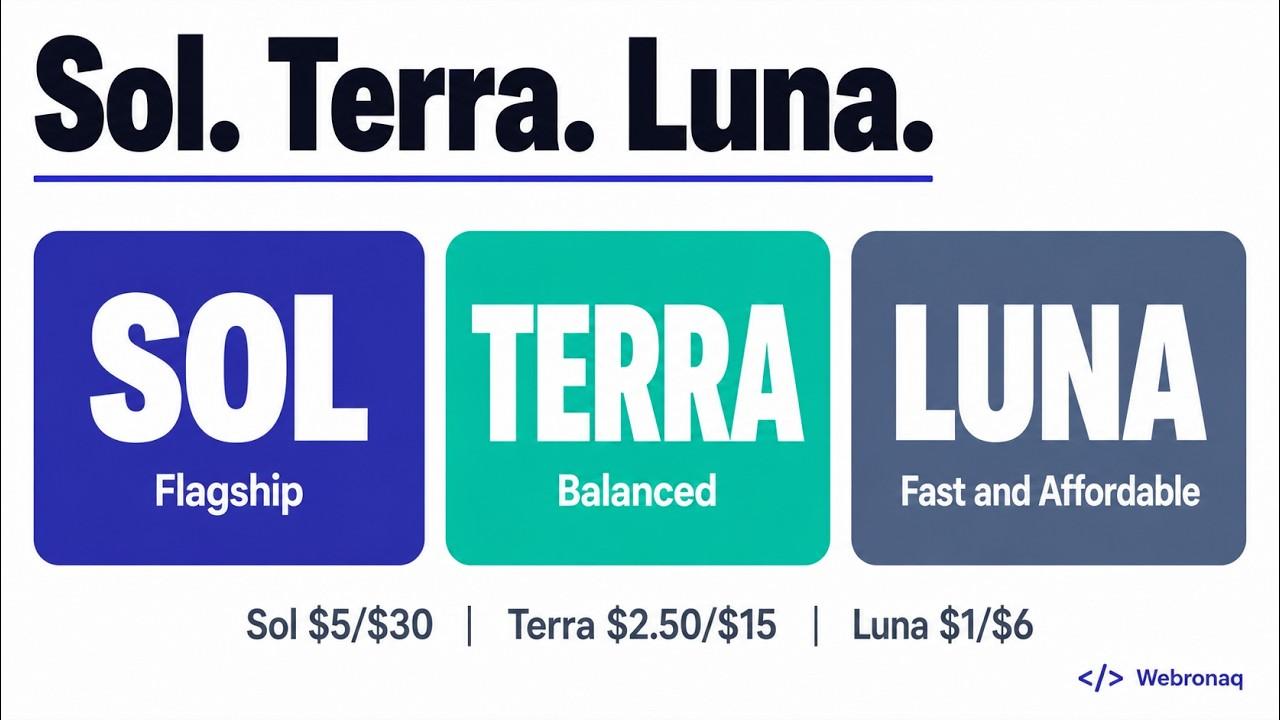
GPT-5.6 Sol vs Terra vs Luna: Save Money, Lose Nothing
GPT-5.6 Sol Terra Luna explained: learn exactly what each tier does, what it costs, and how to choose the right one for your workload without overspending. On July 9, 2026, OpenAI opened GPT-5.6 Sol, Terra, and Luna to everyone after a two-week government-gated preview, and Microsoft adopted GPT-5.6 as the preferred model in Microsoft 365 Copilot the same day. Three tiers went live at once, and every developer now has to make a real decision. This video breaks down the new Sol Terra Luna naming system, walks through OpenAI GPT-5.6 pricing and benchmarks, and gives you a practical three-question framework for GPT-5.6 model selection so you never pay Sol prices for Luna-level work again. In this video: - The new GPT-5.6 naming system: what the number and the tier name each mean - Sol, Terra, and Luna features, capabilities, and token pricing compared - Sol-only features: max reasoning effort and ultra mode with subagents - How Microsoft 365 Copilot maps tasks to the right GPT-5.6 tier in production - The gpt-5.6 API alias trap and how to pin explicit model IDs in your code Subscribe to Webronaq for clear, practical lessons on computer science, AI, and software engineering: https://www.youtube.com/@Webronaq #GPT56SolTerraLuna #OpenAI #GPT56 #AIModels #Webronaq
Jul 12, 2026
Watch video →
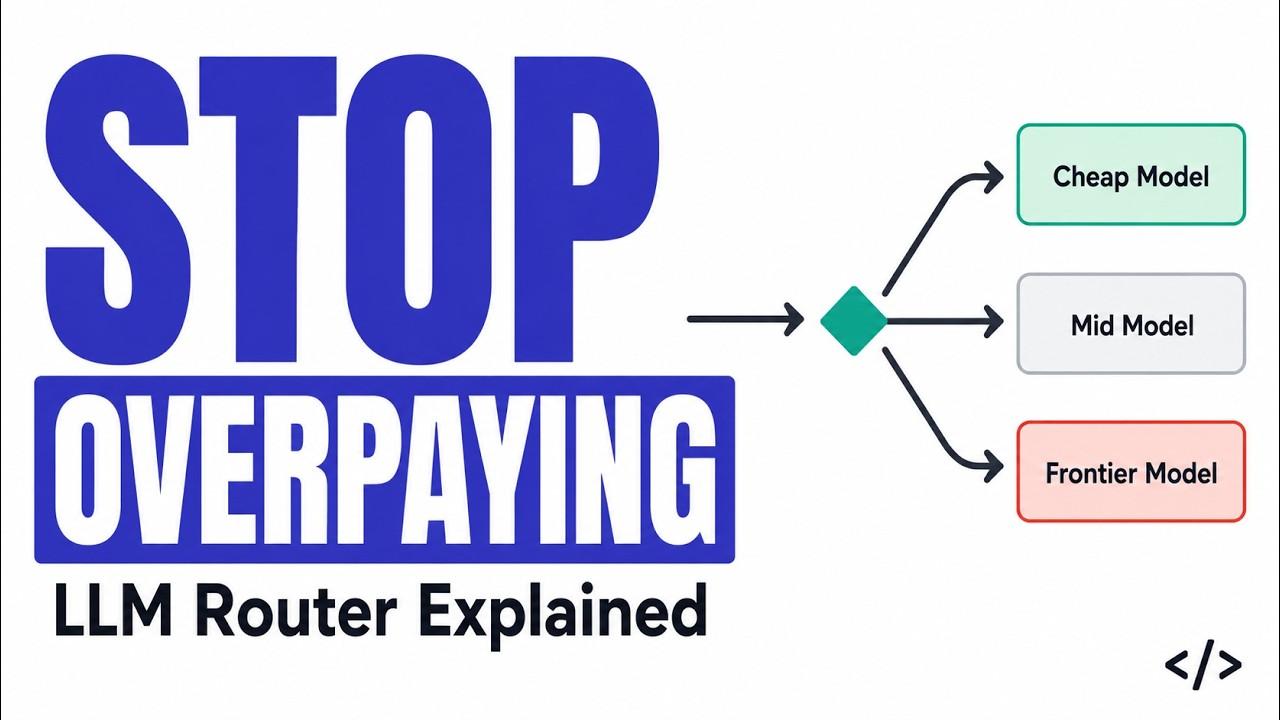
LLM Model Routing: Cut AI API Costs by 80 Percent
LLM model routing cost optimization: stop paying frontier prices for every request and cut your AI API bill by 40 to 80 percent without capping access or slowing your team down. In June 2026, Coinbase CEO Brian Armstrong revealed that his company cut its internal AI spend nearly in half while token usage kept growing, by deploying an LLM gateway that routes each request to the cheapest capable model and pushed its cache hit rate from 5 percent to 60 percent. That real-world result lines up with peer-reviewed research: the RouteLLM paper, published at ICLR 2025 by LMSYS, demonstrated 85 percent cost savings while retaining 95 percent of frontier-model quality. This video breaks down exactly how LLM routing works, the three routing strategies every team should know, and which tools to use to build it yourself today. In this video: - What an LLM router (AI gateway) is and how it intercepts and routes every model request - The Coinbase LLM gateway playbook: smarter defaults, task-based routing, and aggressive caching - Three routing strategies compared: rule-based routing, complexity classifier, and cascade routing - LiteLLM vs Portkey vs OpenRouter: which LLM gateway tool fits your stack in 2026 - A practical five-step checklist to implement LLM cost optimization in your own application Subscribe to Webronaq for clear, practical lessons on computer science, AI, and software engineering: https://www.youtube.com/@Webronaq #LLMmodelrouting #AIcostoptimization #LLMgateway #AIProgramming #Webronaq
Jul 11, 2026
Watch video →